Garage Door Spring Replacement Cost in Los Angeles: DIY vs. Hiring a Licensed Pro
By Gate & Garage Masters10 min read
DIY costs $30 to $250 in parts alone (consumeraffairs.com), but high-tension torsion springs store enough energy to cause broken bones or fatalities if mishandled. For most LA homeowners, hiring a licensed, insured contractor is the safer and more cost-effective long-term choice.
What Does Garage Door Spring Replacement Actually Cost in Los Angeles?
Los Angeles homeowners face pricing above national benchmarks. Higher labor rates drive costs up. Traffic-related dispatch costs add more. Strong demand for same-day service pushes prices higher across the county's sprawling geography. Nationally, the average cost to replace a garage door spring runs $160 to $350 including labor and installation (consumeraffairs.com). In Los Angeles, that range shifts to $150 to $400 for a standard job, with full-service companies often quoting $350 to $750 per spring or $500 to $1,500 for a pair. Labor alone typically accounts for $75 to $150 of the total bill (consumeraffairs.com), which means parts represent only 30 to 50 percent of what you pay a professional. Premium high-cycle springs cost more upfront. They reduce long-term replacement frequency. This makes them worth considering for active households in the San Fernando Valley. Commercial properties in Lancaster benefit most, where doors cycle multiple times daily.
Torsion Springs vs. Extension Springs: Which Type Does Your LA Home Have?
The spring type in your garage directly determines both the cost and the complexity of the replacement job. Torsion springs mount horizontally above the door along a steel shaft and are standard in most LA-area homes built after 1990. Extension springs run along the horizontal tracks on either side of the door and remain common in older properties across neighborhoods like Echo Park, Boyle Heights, and parts of the San Fernando Valley where garages were built with lower ceiling clearances. Nationally, torsion spring replacement averages $150 to $350 per job (homeguide.com), while extension spring replacement averages $120 to $200 (homeguide.com). On a per-spring basis, torsion springs run $75 to $100 per spring installed and extension springs run $50 to $100 per spring installed (consumeraffairs.com). If you are considering converting from an extension to a torsion spring system for better safety and smoother operation, expect to pay $400 to $800 for the full conversion (homeguide.com). That conversion is often worthwhile for double-car garages where extension spring failure creates a larger safety hazard.
How Does Same-Day Emergency Service Affect the Total Price in Los Angeles?
LA's dense traffic patterns and high technician demand make same-day dispatch a premium service. After-hours and weekend emergency rates can push total costs for a double-car garage into the $400 to $600 range (homeguide.com). The solution is simple: always request a written itemized quote before authorizing work. At Gate & Garage Masters, we provide upfront pricing before a single tool comes out of the truck, so Los Angeles County homeowners know exactly what they are paying before the job begins.
What Are the Real Risks of DIY Garage Door Spring Replacement?
Garage door springs are among the most dangerous components in any residential or commercial building. This is not an exaggeration. The U.S. Consumer Product Safety Commission reports about 30,000 garage door injuries annually across the country, and spring failures are among the leading causes. A torsion spring under full tension stores enough mechanical energy to lift a 200 to 400-pound door. That energy releases instantly if the spring fractures. A winding bar slip causes the same result. The result can be shattered wrists, deep lacerations across the face and arms, or worse. The data on DIY tool injuries reinforces this picture: 77% of preventable injury deaths happen at home, not at a worksite (tooltroopers.com), and there are roughly 20 home-based injuries for every 1 workplace injury involving tools (tooltroopers.com). Garage door spring work combines the worst elements of high-energy mechanical systems with the uncontrolled environment of a residential garage.
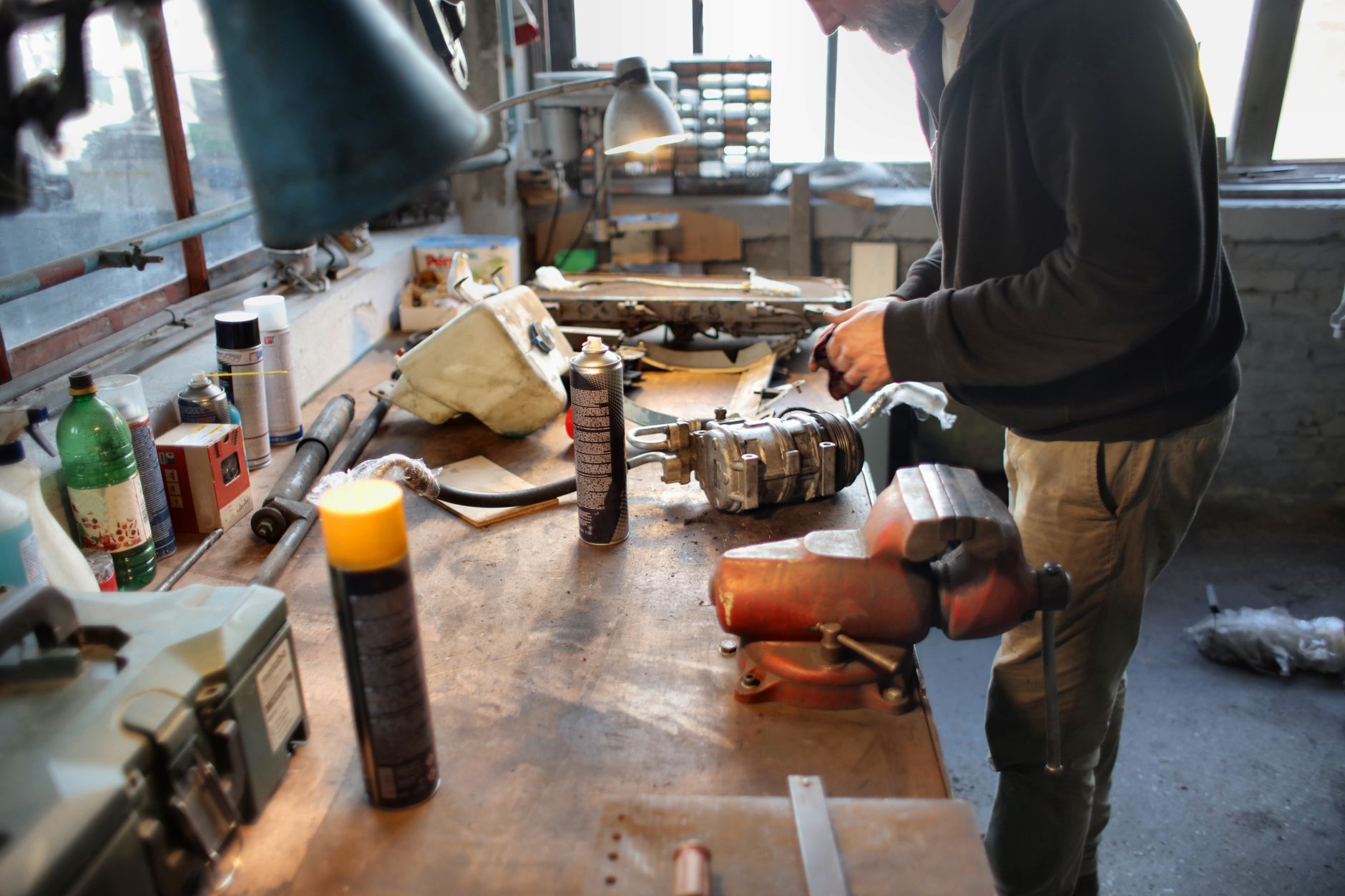
DIY is genuinely unsafe for torsion springs unless you have proper training and the right tools. Safe torsion spring winding requires calibrated winding bars. You need a torque wrench. C-clamps secure the door in the down position. These are not standard household items. Substituting screwdrivers for winding bars is the single most common cause of catastrophic spring release during DIY attempts. YouTube tutorials frequently omit this warning entirely, and the consequences can be permanent.
Why Do DIY Garage Door Spring Failures Happen More Often Than Homeowners Expect?
Most DIY injuries do not occur during the removal of the old spring. They occur during the winding step, which requires precise quarter-turn increments of tension applied with controlled, even force. A misjudged half-turn releases kinetic energy in milliseconds. Beyond the immediate physical danger, misidentifying spring size is a chronic problem for first-time DIYers. Springs are specified by wire diameter, inside diameter, and length. Getting one measurement wrong means the replacement spring generates incorrect torque, leaving the door unbalanced. An unbalanced door strains the opener motor, accelerates cable and drum wear, and can fail unpredictably. Los Angeles adds a specific environmental wrinkle: coastal areas like Malibu experience salt-air humidity that accelerates metal fatigue, while inland valleys including Lancaster experience extreme heat cycling. Both conditions make worn springs more brittle and unpredictable during handling, raising the risk profile for DIY work beyond what homeowners in more temperate climates face.
DIY vs. Licensed Pro: Side-by-Side Comparison
The upfront cost difference between DIY and professional service looks appealing on paper. Parts alone range from $30 to $250 per spring (consumeraffairs.com), versus $160 to $350 all-in for a professional job (consumeraffairs.com). California requires a C-61/D28 specialty contractor license or a Class B general contractor license for garage door work performed for hire. You can verify any contractor's active status, bond amount, and insurance in under two minutes at cslb.ca.gov. Hiring a pro also means the job includes a full safety inspection of cables, drums, rollers, and opener balance settings, which no DIY approach can replicate without specialized diagnostic tools. Labor warranties from licensed contractors typically run 90 days to 1 year, plus manufacturer parts warranties. DIY installs carry no labor warranty at all.
Comparison Table: DIY vs. Licensed Pro for Garage Door Spring Replacement in LA
The table below compares the two options across the dimensions that matter most to Los Angeles County homeowners making this decision.
| Factor | DIY Replacement | Licensed Pro (LA Market) |
|---|---|---|
| Upfront Cost | $30 to $250 (consumeraffairs.com) (parts only) | $150 to $450 (parts + labor) |
| Tool Requirements | Winding bars, torque wrench, c-clamps ($40 to $80 rental/purchase) | Included in service fee |
| Safety Risk | High for torsion springs; moderate for extension springs | Low; technician trained and insured |
| Time to Complete | 3 to 6 hours (first-timer) | 45 to 90 minutes |
| Warranty Coverage | None (parts only, no labor warranty) | 90-day to 1-year labor + parts warranty |
| Insurance Protection | None; homeowner bears full liability | Contractor liability insurance covers damage or injury |
| California License Required? | No (owner-occupied single-family residence) | Yes; C-61/D28 or Class B license for hire |
| Full Safety Inspection Included? | No (skill-dependent) | Yes; cables, drums, rollers, opener balance |
| Same-Day Availability | Depends on parts availability | Yes, with most licensed LA contractors |
| Recommended For | Experienced DIYers, extension springs only | All homeowners, all spring types |
How Do You Vet a Licensed Garage Door Spring Contractor in Los Angeles?
Choosing the wrong contractor in Los Angeles is a well-documented risk. Vetting a licensed garage door contractor in Los Angeles takes about five minutes and protects you completely. Start at cslb.ca.gov and enter the contractor's license number. The CSLB record shows active status, license classification, bond amount, and whether any complaints or disciplinary actions have been filed. A valid C-61/D28 or Class B license is the minimum for any company performing garage door spring replacement for hire in California. Beyond the license check, request a written estimate that itemizes parts by spring type, cycle rating, and brand, along with labor and any trip or emergency fees. No reputable contractor will refuse this request.
Our team at Gate & Garage Masters recommends asking two specific questions before authorizing any spring replacement on a double-car garage. First: will you replace both springs simultaneously? Any contractor recommending single-spring replacement on a two-spring system is cutting corners. When one torsion spring fails, the paired spring has accumulated similar wear and will follow within months. Second: will you perform a full balance test after installation, not just verify that the door opens and closes? A door that moves but is out of balance will damage the opener motor and cables within weeks. These two questions alone will separate professional contractors from operators looking to maximize short-term revenue at your expense. Gate & Garage Masters serves all of Los Angeles County, including the San Fernando Valley, Malibu, and Lancaster, with same-day availability and written quotes with no hidden fees.
What Red Flags Should LA Homeowners Watch for When Hiring a Garage Door Technician?
Several warning signs reliably identify contractors who will cost you more in the long run. Unusually low initial quotes that escalate once the technician is on-site represent the most commonly reported scam pattern in the LA garage door market. Technicians who refuse to provide a written itemized estimate before starting work are a clear warning sign. So is a listing with no physical business address or only a P.O. box, which suggests no fixed accountability. Pressure to pay in cash only, with no receipt, should immediately prompt you to halt the job and verify credentials through CSLB before proceeding.
Verdict: Should LA Homeowners DIY or Hire a Licensed Pro for Spring Replacement?
For the vast majority of Los Angeles homeowners, hiring a licensed pro is the right choice. The decision rests on three factors: safety, cost of ownership, and legal protection. After tool costs, that gap narrows to nearly nothing. After factoring in the realistic risk of a callback or secondary failure within the first 12 months, professional service becomes the clear financial winner. Results speak louder. The data is clear. Torsion spring replacement is not recommended for non-professionals under any circumstances. The stored energy, precision winding requirements, and size-specification complexity create a failure-mode chain that injures experienced homeowners, not just novices.
LA County homeowners with investment properties face an additional layer of risk. A failed DIY spring installation that injures a tenant or damages a vehicle creates liability exposure that far exceeds the cost of professional service. California landlord liability law does not exempt property owners who perform their own maintenance work. The only scenario where DIY genuinely makes sense is extension spring replacement on an owner-occupied single-car garage, performed by a homeowner with prior hands-on garage door service experience (not just video research), who already owns proper winding tools and protective eyewear, and whose property is not shared with tenants. That is a narrow exception. For everyone else, a licensed contractor with verified CSLB credentials, written warranty, and same-day availability in Los Angeles County is the answer.
When Does DIY Garage Door Spring Replacement Actually Make Sense?
The honest answer is: rarely, and only under specific conditions. DIY is defensible only when the homeowner has prior hands-on experience with garage door systems, not just confidence from watching tutorial videos. It applies only to extension spring replacement on a single-car, owner-occupied door. Torsion spring replacement on any residential double-car or commercial door should never be a DIY project. The homeowner must already own calibrated winding bars (never screwdrivers as substitutes), a torque wrench, and protective eyewear before starting. And the garage must not be shared with tenants or part of a multi-unit property where any liability risk exists. If all four of these conditions are met, a careful, experienced DIYer can replace an extension spring safely. If any one condition is absent, call a licensed pro.
Frequently Asked Questions
How much does garage door spring replacement cost in Los Angeles in 2026?
In Los Angeles, garage door spring replacement typically costs $150 to $400 for a standard job with a licensed contractor. Full-service companies may quote $350 to $750 per spring or $500 to $1,500 for a pair. Same-day emergency service in LA adds $50 to $150 to the base rate depending on location and timing.
Is it legal to replace a garage door spring yourself in California?
Yes, California law permits homeowners to perform DIY repairs on their own owner-occupied single-family residence without a contractor license. However, any company or individual performing garage door spring replacement for hire must hold a C-61/D28 specialty license or Class B general contractor license, verifiable at cslb.ca.gov.
How long do garage door springs last in the Los Angeles climate?
Standard galvanized or oil-tempered springs are rated for 10,000 to 20,000 cycles. In Los Angeles, coastal humidity in areas like Malibu accelerates metal fatigue, while the extreme heat cycling in the inland valleys around Lancaster shortens spring life. Premium high-cycle springs reduce replacement frequency and are worth the upfront cost for active households.
What is the difference between a torsion spring and an extension spring on a garage door?
Torsion springs mount horizontally above the door along a steel shaft and are standard in most LA homes built after 1990. Extension springs run along the horizontal tracks on each side of the door and are common in older properties with lower ceilings. Torsion springs store significantly more energy, making them far more dangerous to replace without professional training.
How can I verify a garage door contractor is licensed in California?
Visit cslb.ca.gov and enter the contractor's license number. The California Contractors State License Board public record shows active status, license classification (look for C-61/D28 or Class B), bond amount, insurance status, and any complaints or disciplinary actions. The search takes under two minutes and is free to any consumer.
Does homeowners insurance cover garage door spring replacement in Los Angeles?
Standard homeowners insurance policies typically do not cover garage door spring replacement because springs fail from normal wear and tear, not from a covered peril like fire, storm, or vandalism. If a spring failure causes secondary damage to a vehicle or the door structure itself, that damage may be covered under specific policy terms. Review your policy or call your insurer to confirm.
What is the average spring replacement cost in Los Angeles?
Los Angeles spring replacement costs run $150 to $400 for a standard single-car garage with a licensed contractor, slightly above the national average of $160 to $350. Double-car garages with two torsion springs typically cost $300 to $750. Local pricing reflects higher LA labor rates, same-day dispatch demand, and the county's wide service geography across neighborhoods from Malibu to Lancaster.
Can I safely replace a garage door spring myself?
Safely replacing a torsion spring yourself is not recommended for non-professionals under any circumstances. Extension spring replacement on a single-car owner-occupied door is feasible only if you have prior hands-on garage door experience, own calibrated winding bars and a torque wrench, and your property has no tenants. The U.S. CPSC reports about 30,000 garage door injuries annually nationwide.
What factors affect garage door spring repair prices?
Key cost drivers include spring type (torsion costs more than extension), number of springs (double-car garages need two), spring cycle rating (high-cycle springs cost more upfront), LA labor market rates, same-day or after-hours dispatch fees, and whether a full safety inspection of cables, drums, and opener is included. Emergency weekend service in Los Angeles adds $50 to $150 to any base quote.
How much do torsion and extension springs cost to replace?
Nationally, torsion spring replacement averages $150 to $350 per job and extension spring replacement averages $120 to $200. On a per-spring basis, torsion springs run $75 to $100 installed and extension springs run $50 to $100 installed. In Los Angeles, expect prices at the higher end of these ranges due to local labor costs and service demand across the county.
Should I hire a pro or just replace the spring?
Hire a licensed pro in nearly every situation. The upfront savings from DIY ($100 to $270 before tool costs) are offset by warranty loss, the risk of a callback repair bill, and serious injury risk from torsion springs. A licensed LA contractor completes the job in 45 to 90 minutes, includes a full safety inspection, and carries liability insurance that protects your property and your household.
Sources & References
About the Author
Gate & Garage Masters
Gate & Garage Masters delivers expert gate, garage door, and fence services across Southern California. With 10+ years of licensed experience, they provide same-day installations, repairs, and emergency solutions for residential and commercial properties.
Related Posts
How to Verify a Gate Contractor's CSLB License in California: Step-by-Step Guide
Before hiring a gate contractor in California, verifying their CSLB license protects you from unlicensed operators, unpaid liens, and costly liability. This step-by-step guide walks you through the official CSLB lookup process, what license classifications cover gate and fence work, and the red flags that signal an unlicensed or fraudulent contractor.
11 min read

Electric Driveway Gate Cost in Los Angeles: What to Budget for Materials, Labor, and Permits
Installing an electric driveway gate in Los Angeles typically costs between $4,500 and $18,000, depending on material, gate width, motor type, and permit requirements. This guide breaks down every cost category so you can budget accurately before calling a contractor.
10 min read